
Hazards of Nursing
- Kyra Chester-Paul
- Sep 7, 2025
- 2 min read
Being a nurse is no joke.
Healthcare is a business that runs 24/7/365, and hospitals have to staff nurses every hour of every day. Nurses have to work nights, weekends, and holidays to make sure that their patients are well taken care of.
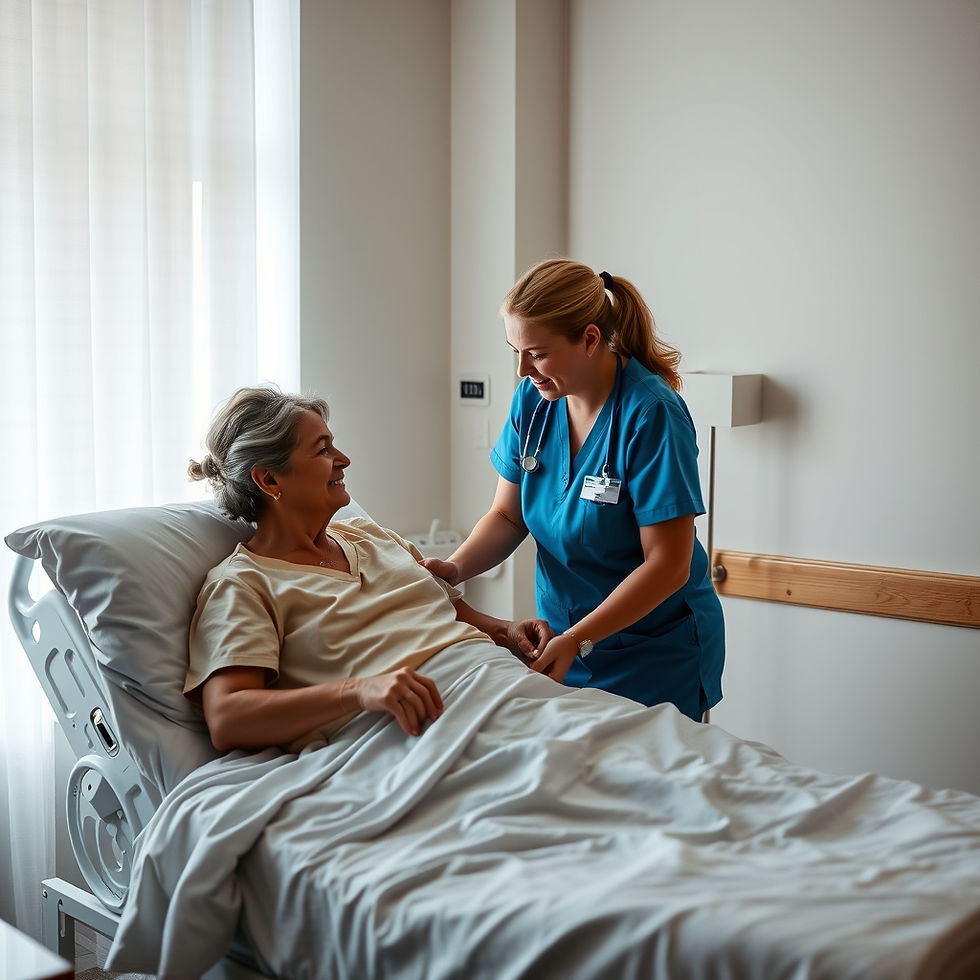
The nature of the work they do is deeply human. They are at the patient’s side during some of their most humiliating moments: when they wet the bed, when they lose their ability to walk, or when they get confused or disoriented. They often get to know their patients best because they spend more time at the patient’s bedside than any other provider.

Nursing provides a level of job satisfaction that few professions allow for; no matter where in the world they are, nursing work is always making the world better, one patient at a time.
But in spite of all the positives, nursing is also an inherently dangerous profession.
They are often fatigued due to the long hours and shift allocations that disrupt sleep schedules (Malones, 2020), which impacts their relationships with spouses, friends, and family over time.
Through their work, nurses are exposed to body fluids, infectious diseases, and all sorts of assaults and verbal abuse from patients who are acting out for any number of reasons. They see the psychological traumas and ramifications of mental health crises, drug use, child abuse, and accidental injury.
They also suffer orthopedic issues from poor body mechanics as they transfer their patients to and from bed or wheelchair (Malones, 2020). According to the US Bureau of Labor Statistics, “these injuries occurred at a rate of 53.1 cases per 10,000 full-time workers, significantly greater than the rate for all occupations (32.6 cases per 10,000 workers).”
To some degree, the hazards of nursing are unavoidable. Nurses will see the best and worst of humanity. They will be called on to work demanding schedules with challenging patients.
But some of these hazards are avoidable. We should not be accepting more than 20% of the national average injury rate for our nation’s caregivers.
At ReviMo, we believe that we can do better. With our device, we would like to see the nurse injury rates due to patient transfers drop to zero. Together, let’s build a new standard for nurses.
Sign up for a demo-day here: Healthcare Facilities | ReviMo - Mobility
References:
“Occupational Injuries and Illnesses among Registered Nurses.” U.S. Bureau of Labor Statistics, U.S. Bureau of Labor Statistics,
www.bls.gov/opub/mlr/2018/article/occupational-injuries-and-illnesses-among-registered-nurses.htm Accessed 1 June 2025.
Rina Malones RN, et al. “The Dangers of Being a Nurse - Are the Risks Worth Taking?” RNspeak, 19 Aug. 2020, rnspeak.com/dangers-nurse-risks-worth-taking/


Comments